
The best deck railing or balustrade for a coastal Gold Coast home is one that balances safety, corrosion resistance, maintenance, and the view you want to keep. Salt-laden air, humidity, strong sun, and regular rain can be hard on exposed timber and metal, so a system that looks perfect in a showroom may not be the right choice near the coast. If you are upgrading an existing deck or planning a new outdoor living space, choose the balustrade as part of the deck design rather than as a decorative item added at the end.
Why Coastal Conditions Change Your Balustrade Choice
Coastal exposure changes the job because moisture and airborne salt can accelerate corrosion and weathering. The closer a property is to the ocean, the more attention should be paid to material grade, coatings, compatible fixings, and cleaning requirements. Timber can still be a great choice, but species, treatment, paint or oil systems, and ventilation need to suit exterior use. Metal systems need the right protection for their environment, and even stainless steel benefits from appropriate maintenance. Gold Coast homeowners should also think about pool splash, irrigation, and shaded damp areas, not just direct sea air.
Marine-Grade Stainless Steel Versus Standard Stainless Steel
Stainless steel is popular for modern balustrades because it can provide slender lines and strong corrosion resistance, but grades and finishes are not interchangeable. Miami Stainless’ coastal guide recommends 316 stainless steel for exposed wire balustrade components because it offers better resistance to chloride environments than common 304 grade. That does not make any stainless system maintenance-free. Surface contamination, tea staining, and incompatible components can still create problems. Ask the supplier or builder what grade is specified for posts, wire, terminals, and fixings, and whether the complete system is suitable for the property’s exposure. Mixing materials without considering galvanic interaction or manufacturer requirements can undermine an otherwise good product.
| 316 Grade | 304 Grade | |
|---|---|---|
| Chloride (salt air) resistance | Higher, contains molybdenum for added resistance | Lower, more prone to pitting near the coast |
| Recommended use | Direct sea exposure, wire balustrades, exposed fixings | Sheltered or inland locations, away from direct salt air |
| Maintenance | Still needs regular fresh-water rinsing and cleaning | Needs more frequent cleaning in coastal settings |
| Typical cost | Generally higher than 304 | Generally lower than 316 |
General material comparison based on common industry guidance. Ask your supplier to confirm the grade of every component in the system, including posts, wire, terminals, and fixings, not just the visible rail.
Wire Balustrades and the Views They Preserve
Wire balustrading is often chosen where homeowners want a light visual barrier that keeps an outlook open. On an elevated deck facing the ocean, hinterland, or pool, thin horizontal or vertical lines can feel less visually heavy than solid panels. The design still has to satisfy the applicable building and safety requirements, including geometry, strength, and installation details. Wire tension, post spacing, and terminal selection should be engineered or specified as a complete system rather than guessed on site. For families, also consider how the railing will be used day to day. Furniture placement, children, pets, gates and nearby climbable objects can all affect whether a particular layout is practical as well as attractive.
Timber Railings and What Coastal Exposure Does to Them
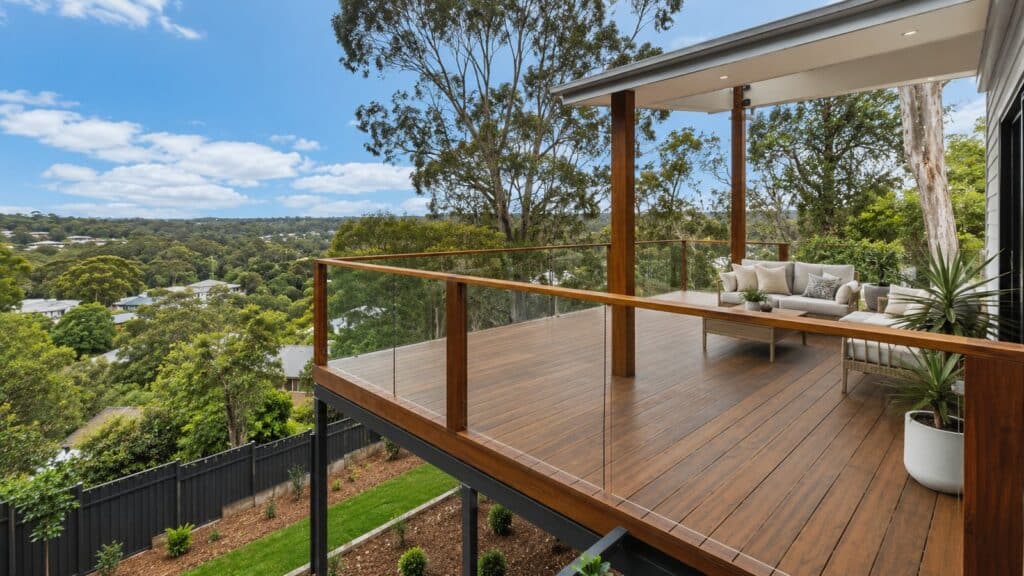
Timber railings suit Queenslander, Hamptons and more traditional homes because profiles, posts and paint colours can be matched to the architecture. The trade-off is ongoing care. Queensland Government deck-maintenance guidance highlights the importance of keeping timber dry where possible, allowing ventilation, clearing debris and maintaining protective finishes. Coastal salt, sand and wind make those habits more important. Treated pine needs an appropriate exterior coating system, while durable hardwood species still require a realistic maintenance plan if you want to preserve a particular colour and finish. Inspect joints, end grain, posts and areas where water can sit. A beautiful railing can deteriorate early if moisture is trapped around the structure.
Glass Balustrades for a Modern Coastal Look
Glass can create a clean, modern edge around decks, balconies and poolside spaces while keeping the view visually open. Salt spray, fingerprints and water spotting are more visible on glass, so a homeowner who wants a constantly clear finish should be comfortable with regular cleaning. The glass, posts, spigots, channels and fixings need to form a compliant system suited to the deck and exposure. Frameless and semi-frameless designs can look seamless, but the hardware and supporting structure still do the real work. Before choosing glass, check wind exposure, access for cleaning, glare, privacy, and how the panels meet stairs, gates, or adjacent fencing.
| Material | Corrosion / Weather Resistance | Typical Maintenance | View Openness | Best For |
|---|---|---|---|---|
| 316 stainless wire | High, best suited to direct sea exposure | Regular fresh-water rinsing | Very open | Elevated decks with ocean or hinterland views |
| 304 stainless | Moderate, better suited away from direct salt air | Frequent cleaning in coastal settings | Very open | Sheltered coastal or inland decks |
| Timber | Depends on species and coating system | Regular oiling, painting or staining | Partially open | Queenslander and Hamptons-style homes |
| Glass | Glass itself does not corrode; hardware grade matters | Regular washing to stay clear | Fully open | Modern coastal and poolside decks |
| Aluminium / coated metal | Good with a marine-rated coating | Low to moderate | Moderate | Low-maintenance, budget-conscious builds |
A general comparison to guide the conversation with your builder or supplier. Every system still needs a grade, coating and fixing specification suited to your exact site exposure.
NCC and Australian Standard Requirements for Deck Balustrades

Balustrade compliance is a safety matter, not a styling preference. The applicable National Construction Code provisions and referenced Australian Standards depend on the building, location and exact barrier application, and pool barriers can have additional requirements. Requirements can cover when a barrier is needed, minimum height, openings, structural strength and climbability. Because codes and standards can change, use the current requirements that apply when the project is designed and approved rather than relying on an old blog post or a neighbour’s deck. A licensed builder, building designer, engineer or certifier should be able to explain which rules apply to your project and how the proposed balustrade system satisfies them.
A Simple Three-Step Process
Assess
Review height, exposure, pool zones, views, and existing structure.
Specify
Choose a complete, compliant material and fixing system for the site.
Maintain
Follow the product care plan and inspect the barrier regularly.
Maintaining Balustrades in Salt Air and Humidity
Maintenance starts with choosing a system you are actually willing to look after. Stainless components may need fresh-water cleaning to remove salt deposits. Coated metal should be checked for chips, scratches or early corrosion, particularly around fixings and joints. Timber needs cleaning and recoating in line with the chosen finish. Glass needs regular washing if a clear outlook matters to you. Avoid letting soil, leaves or planters hold moisture against posts and rails. During a routine deck check, look for loose fixings, movement, corrosion, timber softness, cracked panels or changes around connection points. If a safety barrier moves or looks damaged, arrange a professional assessment rather than treating it as a cosmetic repair.
- Rinse stainless steel and metal fixings with fresh water after salt spray or heavy sea air.
- Check timber posts, joints and end grain for trapped moisture or early softness.
- Wash glass panels regularly to keep the view clear and spot early hardware issues.
- Keep soil, leaves and planters clear of posts and rails so moisture cannot sit against them.
- Arrange a professional assessment if any barrier feels loose or shows movement.
Matching Railing Style to a Hamptons or Queenslander Home
A coastal look is not one material. Hamptons and Queenslander homes often suit painted timber posts, traditional handrail profiles and lighter colours, while a contemporary renovation may work better with glass, slim metal or stainless wire. The best result usually comes from repeating lines that already exist on the house. Look at window proportions, verandah posts, roof shape, stairs and the rhythm of the facade. Then decide whether the railing should blend in or deliberately contrast. If the deck connects to a modern patio or pergola, the balustrade can help bridge old and new elements. Style matters, but it should sit behind safety, exposure suitability, and practical maintenance.
Common Balustrade Mistakes on Gold Coast Decks
The most common mistakes happen when appearance is chosen before the system is resolved:
- Selecting hardware without checking whether it suits the property’s coastal exposure.
- Treating wire tension, post spacing or glass support as a visual detail rather than structural work.
- Forgetting how stairs, gates, pool barriers and furniture affect the completed safety zone.
- Assuming “stainless” or “powder coated” automatically means maintenance-free.
These problems can create extra cost later because changing one balustrade component may affect posts, decking, stairs or approvals. Resolve the complete barrier early, including materials, fixing method and maintenance expectations, then make the aesthetic choices inside those practical limits.
Cost Differences Between Balustrade Materials
Balustrade pricing varies too much by system and site to choose responsibly from a generic per-metre figure. Timber may look affordable at first but can involve more finishing and future recoating. Wire systems vary with post material, spacing, grade, terminals and labour. Glass cost changes with panel type, hardware, custom sizes and access. Aluminium and other coated metal systems have their own profiles, fabrication and finish requirements. The useful comparison is whole-of-project value: supply, installation, supporting structure and expected upkeep. Ask for the exact product or material specification in the quote. If two prices differ sharply, check whether the cheaper option has changed the grade, fixing system, panel type or amount of preparation.
Choosing a Builder Who Understands Coastal Compliance
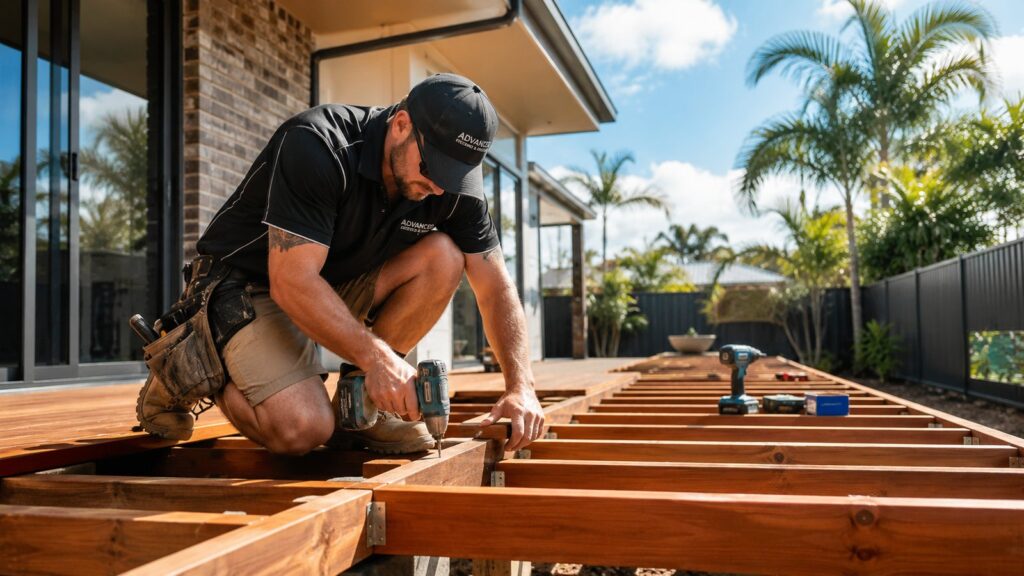
A builder working on Gold Coast decks should be able to talk about more than colour and style. Ask how they approach coastal fixings, drainage, ventilation, material compatibility, balustrade loads and current approval requirements. Ask to see completed projects with similar exposure and a similar deck type. Advanced Decking & Patios states that it is family-owned, fully insured, holds QBCC Licence No. 15200654, and has more than 17 years of experience. The company also describes experience with timber, composite, glass, elevated, and pool decks. Those details help establish experience, but the project-specific proposal should still identify the system being installed and the responsibilities for design, engineering, or certification where required.
Getting the Right Balustrade for Your Deck from the Start
The safest and most cost-effective time to make a balustrade decision is before the deck framing and edge details are final. That lets the builder plan post locations, blocking, stair geometry, gates, drainage, and the relationship with the deck boards. It also gives you time to compare upkeep and appearance without holding up construction. Bring photos of the house, the view, and any style ideas to the consultation, but be ready to discuss how the space will actually be used. A good balustrade should feel like part of the architecture, stand up to its environment, and protect people without becoming the feature you have to constantly worry about.
If you are planning a new deck or replacing an existing railing, make the balustrade part of the first design conversation early. Advanced Decking & Patios can discuss timber, composite, pool and elevated deck projects across the Gold Coast and coordinate related stairs, patios, pergolas or screening. Send photos and a short description of the site when you request a free quote today so the team can start with the practical constraints clearly, not just a product photo.
Frequently Asked Questions
What’s the best balustrade material for a coastal Gold Coast deck?
Do I need a pool safety barrier around my deck?
How often should I clean a stainless steel wire balustrade near the coast?
Can I mix timber posts with glass or wire balustrade panels?
Contact Us
Fill in the form below or call us on
0413 696 445 to get more information about our services.