
The short answer: timber decking gives you the natural look, warmth and feel of real wood and usually costs less upfront. Composite decking costs more to start with but needs far less maintenance. For most Gold Coast homeowners, the right choice depends on how much time you want to spend sanding and oiling, how much sun the deck gets, and whether it sits by a pool or the beach.
If your old timber deck has started to rot, splinter or move underfoot, you’ve probably already asked yourself whether composite decking is worth the extra cost.
We’ve been building hardwood and composite decks across the Gold Coast for over 17 years, from pool surrounds to elevated decks on steep blocks, and we use both.
Decking by the Numbers
17+
Years building hardwood and composite decks on the Gold Coast
40+ yrs
Expected above-ground life of Class 1 spotted gum (Wood Solutions)
H3
Minimum treatment level for treated pine decking above ground
BAL-29
Bushfire rating listed for spotted gum, blackbutt and merbau decking
How Timber and Composite Decking Differ
Timber Decking
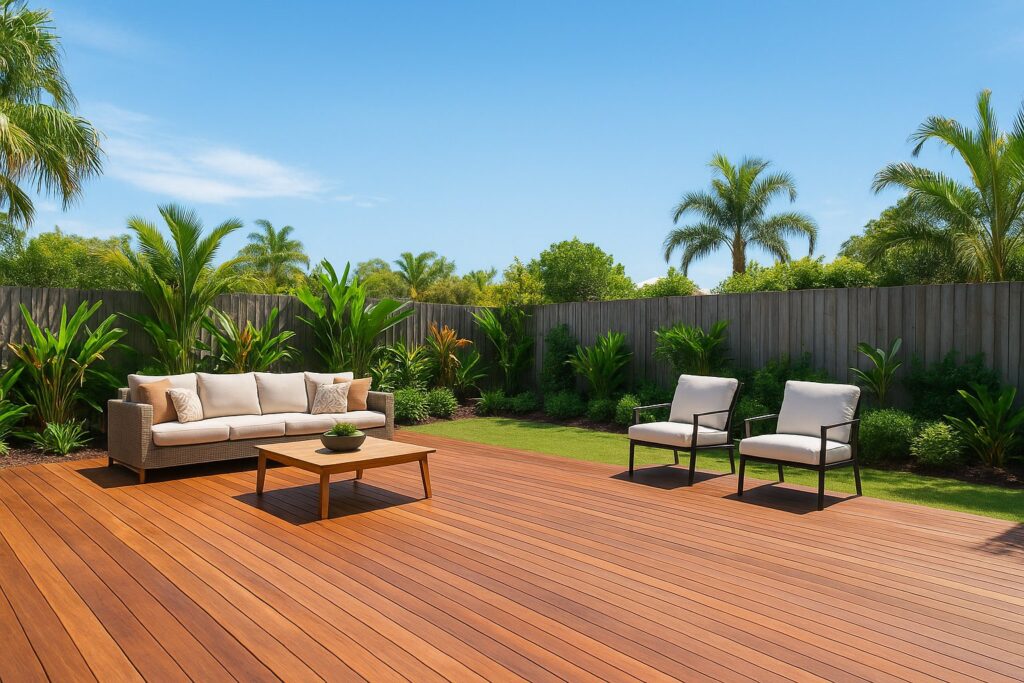
Timber decking is solid wood: either a durable hardwood or treated pine.
- ✓ Looks and feels natural
- ✓ Can be sanded back and recoated
- ✓ Colour changes over time
- ✓ Usually costs less upfront
Composite Decking
Composite decking is a manufactured board, usually a mix of wood fibre and recycled plastic.
- ✓ Designed to look like timber, with a more consistent appearance
- ✓ Lower ongoing upkeep
- ✓ Behaves differently in heat
- ✓ Installed differently, to the manufacturer’s rules
Timber vs Composite at a Glance
| Factor | Timber decking | Composite decking |
|---|---|---|
| Upfront cost | Treated pine is generally the cheapest; hardwood varies by species | Usually more than treated pine; compared with hardwood, depends on species and system |
| Maintenance | Clean and recoat, often every year or so in full sun | Mostly a sweep and a wash |
| Look | Natural grain variation and warmth | Uniform, consistent finish |
| Heat underfoot | Stays relatively comfortable | Dark boards can get very hot; lighter colours help |
| Splinters | Possible as coatings wear | Doesn’t splinter |
| Termites | Needs termite management | Boards resist termites, but the timber subframe still needs protection |
| Can be refinished | Yes, by sanding and recoating | No; colour is built into the board |
Popular Timber Species for Gold Coast Decks
| Species | Look | Durability above ground | Bushfire rating | Watch out for |
|---|---|---|---|---|
| Spotted gum | Rich colour range and strong grain; a Queensland favourite | Class 1 (more than 40 years) | BAL-29 | Low tannin content |
| Blackbutt | Pale, fairly even colour that suits lighter, coastal-style homes | Class 1 | BAL-29 | Can stain surfaces when wet due to tannins |
| Merbau | Deep red-brown imported hardwood | Class 1 | BAL-29 | Leaches tannins when new, which can stain concrete or paving |
| Treated pine | The budget option | Treated to H3 for above-ground use | BAL-12.5 | Resin in knots can mar paints and stains |
Durability from Wood Solutions; bushfire ratings and tannin notes as listed by timber supplier Bowens. Always confirm the rating for the exact product you buy.
Wood Solutions lists spotted gum as a Class 1 durability timber, meaning an expected service life above ground of more than 40 years with good detailing and maintenance. For treated pine decking, H3 is the level for above-ground outdoor use under the Australian treatment standard.
Janka Hardness Compared
| Spotted gum | 10.1 |
| Blackbutt | 8.9 |
| Merbau | 8.5 |
Janka hardness ratings as listed by Bowens. A higher number means a harder board that better resists dents from furniture, toys and pets.
What Composite Decking Is Made From
Most composite boards combine wood fibre or flour with recycled plastic and binding agents. Some brands state recycled or reclaimed content of over 90%.
| Type | How it’s made | What it means |
|---|---|---|
| Standard composite | Wood fibre and recycled plastic blended through the whole board | Low upkeep, but the surface is more exposed to stains and scratches |
| Capped composite | A composite core wrapped in a tougher polymer shell | Better stain, scratch and fade resistance |
Products vary a lot between brands, so warranty, colour range and installation rules depend on the system you choose.
Upfront Cost Compared
Treated pine is generally the cheapest decking to buy. Composite usually costs more per square metre than treated pine, and how it compares with hardwood depends on the species and the board system you choose.
But board price is only part of the cost. These often move the total more than the boards themselves:
- ✓ Deck height and access
- ✓ Stairs and balustrades
- ✓ Footings
- ✓ The subframe
Maintenance and Ten-Year Running Costs
Ongoing care is where the gap narrows. Here’s what each option asks of you:
| Task | Hardwood deck in full sun | Composite deck |
|---|---|---|
| Cleaning | Regular clean | A sweep and a wash with soapy water and a hose |
| Coating | Fresh coat of oil or stain, often every year or so, sometimes more often | None needed |
| Sanding | Periodically over its life | Not needed |
| Who sets the timing | The coating manufacturer’s instructions | The board manufacturer’s care guide |
Over ten years, that difference in time, coating products and labour can narrow or even close the upfront price gap. It’s worth weighing this against your budget and how much weekend maintenance you actually want to do.
Under a roof: a deck under a patio roof is a different story, because the boards are shielded from most of the sun and rain, so timber coatings tend to last noticeably longer.
How Each Material Handles Heat, Humidity and Salt Air
Both materials can perform well on the Gold Coast when they’re specified properly, but they behave differently:
| Condition | Timber decking | Composite decking |
|---|---|---|
| Hot sun | Stays relatively comfortable underfoot; coatings break down faster in full sun | Dark boards can get very hot underfoot; lighter colours help |
| Humidity and moisture | Needs airflow and coatings to limit mould, cupping and rot | Resists rot, but mould can still grow on surface grime in damp, shaded spots |
| Salt air | Hardwood handles it well; fixings must suit coastal exposure | Board handles it well; fixings and subframe still need coastal-grade specs |
| Ventilation | Needs ventilation under the deck | Each manufacturer sets its own minimum clearance and airflow |
Termites and the Substructure Underneath
Composite boards are usually fixed to a timber subframe, so swapping to composite doesn’t remove termite risk from the deck. Termites are a common risk across South East Queensland, so the structure underneath matters as much as the boards on top:
- ✓ Termite management for the structure
- ✓ Suitable framing timber
- ✓ Keeping soil and garden beds clear of the structure
- ✓ Keeping timber sleeper retaining walls away from the deck
Steel or aluminium subframes are an option where termite risk or long-term durability is a big concern.
Look, Feel and Colour over Time
Choose Timber If…
A natural, premium look matters most.
- ✓ You love natural grain variation and warmth
- ✓ You like the idea of a silvery grey weathered finish if left uncoated
- ✓ You want to be able to sand and refresh it
Choose Composite If…
A consistent, modern finish matters most.
- ✓ You want a uniform look across every board
- ✓ You want colours designed to hold, after a little change in the first months as they settle in the UV
- ✓ You’d rather not recoat
Installation Differences Like Joist Spacing and Expansion Gaps
Composite and timber don’t install the same way. Composite systems have their own rules for joist spacing, end and side gaps, fixings and ventilation, and these differ between brands.
| Detail | Timber decking | Composite decking |
|---|---|---|
| Joist spacing | Set by the board size and the framing standard | Set by each manufacturer; often closer than timber |
| Expansion gaps | Gaps for drainage and timber movement | Set end, side and wall gaps, sometimes varying with the temperature on install day |
| Fixings | Face screws or hidden fixing systems | Many use hidden clips, so there are no screw heads on the surface |
| Before installing | Boards may need time to acclimatise | Boards often need to acclimatise on site first |
As an example, one Australian composite system’s guide calls for joists at 250 mm to 350 mm centres, end gaps of 1 mm to 6 mm depending on the outside temperature, and at least 24 hours for the boards to acclimatise before installation. Getting these details wrong can void the warranty, which is why installation by an experienced builder matters.
Which Option Suits Pools, Rentals and Shaded Decks
| Situation | Usually suits | Why |
|---|---|---|
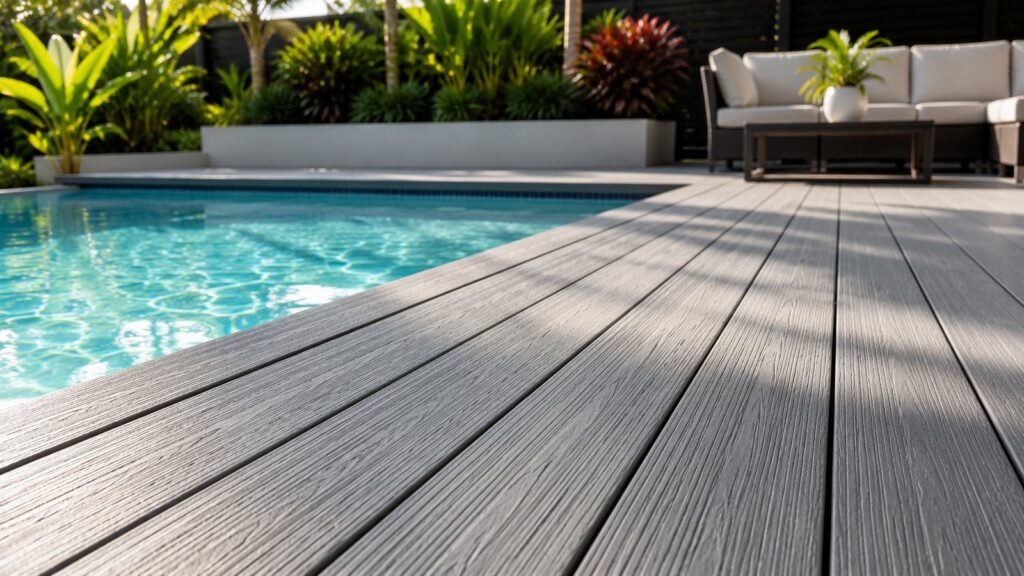
| Pool surrounds | Composite | It doesn’t splinter. Choose a lighter colour and check the manufacturer’s guidance on chlorine or salt water pools. |
| Rentals | Composite | Suits investors who don’t want ongoing coating jobs between tenants |
| Shaded decks | Timber | Works well under a patio roof, where coatings last longer. In damp, shaded spots, composite still needs regular cleaning to stop surface mould. |
| Character homes | Hardwood | Often suits Queenslanders and traditional homes best |
Bushfire-prone sites: if your home is in a bushfire-prone area, such as parts of the Gold Coast hinterland, decking may need to meet the requirements of AS 3959 for your site’s Bushfire Attack Level (BAL). Not every timber species or composite product is suitable for every BAL, so check before you buy.
Sustainability and Recycled Content
Composite
- ✓ Often contains a high share of recycled plastic and wood fibre
- ✓ Keeps waste out of landfill
- ✓ Mixed-material boards can be harder to recycle at the end of their life
Timber
- ✓ Stores carbon
- ✓ A responsible choice when sourced from certified forests
- ✓ Look for certification such as Responsible Wood or FSC, especially for imported species
How a Deck Job Runs With Us
1
Look at the Site
We check the levels, sun, drainage and access, and get a quote back to you within 48 hours.
2
Choose the Boards
We talk through timber and composite options for your budget and confirm the subframe and joist spacing the boards need.
3
Build
We build the frame and lay the boards to the manufacturer’s rules, then clean up.
Questions to Ask Your Deck Builder
- Is the builder QBCC licensed and insured? You can look up any licence on the QBCC website.
- Which board system and subframe are you using, and what joist spacing and gaps does the manufacturer require?
- What fixings will be used for our distance from the coast?
- How will termites, drainage and ventilation be handled?
- What warranties apply to the boards and the workmanship?
Timber vs Composite Decking FAQs
Is composite decking better than timber?
Neither is better for every deck. Timber gives a natural look and usually costs less upfront, while composite costs more to start with but needs far less maintenance. Sun exposure, a pool or the beach nearby, and how much upkeep you want all affect the right choice.
Does composite decking get hot on the Gold Coast?
Dark composite boards can get very hot underfoot in full sun. Lighter colours help, and a patio roof over the deck makes a big difference.
How long does a spotted gum deck last?
Wood Solutions lists spotted gum as Class 1, with an expected service life above ground of more than 40 years when the deck is well detailed and maintained.
Do composite decks get termites?
The boards resist termites, but composite is usually fixed to a timber subframe, so the deck still needs termite management. Steel or aluminium subframes are an option where termite risk is a big concern.
Why does merbau stain concrete?
Merbau leaches tannins when it’s new, which can stain nearby concrete or light-coloured paving. It needs planning around those surfaces and a tannin clean before coating.
Is composite decking good around pools?
It’s popular around pools because it doesn’t splinter. Choose a lighter colour and check the manufacturer’s guidance for chlorine or salt water pools.
What decking can be used in a bushfire-prone area?
Decking may need to meet AS 3959 for your site’s Bushfire Attack Level. Spotted gum, blackbutt and merbau are commonly listed at BAL-29, while treated pine is often listed at BAL-12.5. Always confirm the rating for the exact product.

Weighing Up Timber or Composite?
Penny Chen said her new deck made the family’s outdoor space much more enjoyable, and that our team was patient with all her questions. Bring yours.
Call us on 0413 696 445 or request a free quote, and we’ll price the same deck in timber and composite so you can see the difference for your own project. We’re family-owned, QBCC licensed (Licence No. 15200654), and fully insured, with finance options available.
Contact Us
Fill in the form below or call us on
0413 696 445 to get more information about our services.